From Transaction to
Relationship.
Leading the end-to-end UX strategy to transform a fragmented portal into a personalized ownership companion for Nissan & Infiniti.
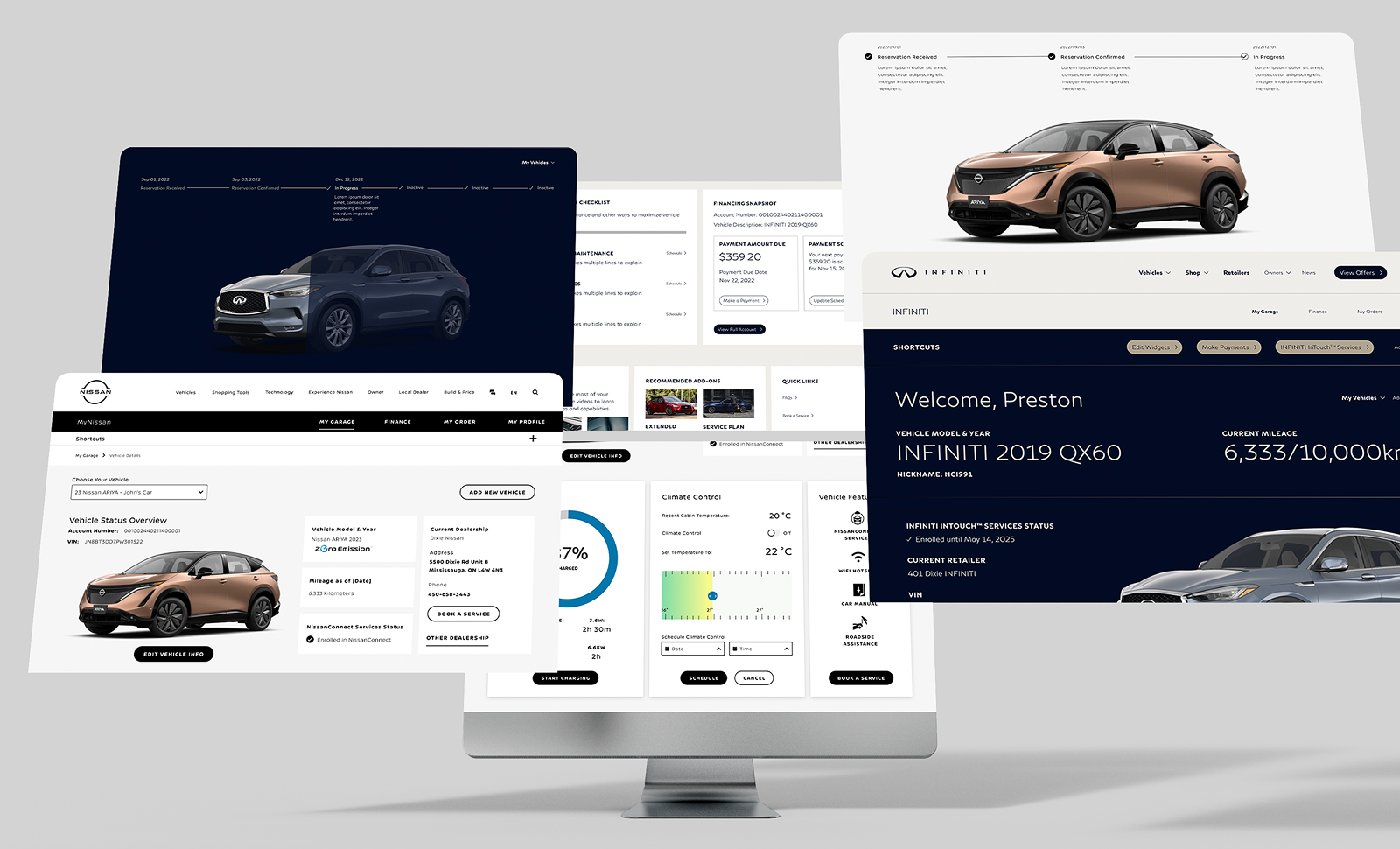
Project Overview
-
Role
Lead Product Designer (Strategy to Execution)
-
Team
Cross-functional collaboration with Research, Engineering, and Global Stakeholders.
-
Core Focus
UX Strategy, Multi-Brand Design System, Interaction Architecture.
The Context: A Fractured Journey
The ownership experience was fractured. While the "Buying" journey was seamless, the "Owning" experience felt like a dead end. Users were forced to navigate across 3 disconnected platforms for Finance, Service, and Telematics.
The Goal
To consolidate these fragmented tools into a single "Connected Ecosystem" that increases retention and drives brand loyalty.
The Disconnection
Each jump between platforms broke the user's flow, creating friction and reducing engagement.
The Complexity
The architecture had to support Two Powertrains (EV vs. ICE) and Two Brands (Nissan vs. Infiniti) within a single, scalable codebase.
Evidence-Based Strategy
Before touching a single pixel, I needed to untangle the complexity of Nissan's ecosystem. I led a "Research-First" strategy to align global stakeholders on a shared vision.
STEP 01 Audit & Immersion
Comprehensive Audit
I conducted a comprehensive audit of the existing portal, identifying critical "drop-off points" where users abandoned the platform due to confusing navigation or broken links between Finance and Service tools.
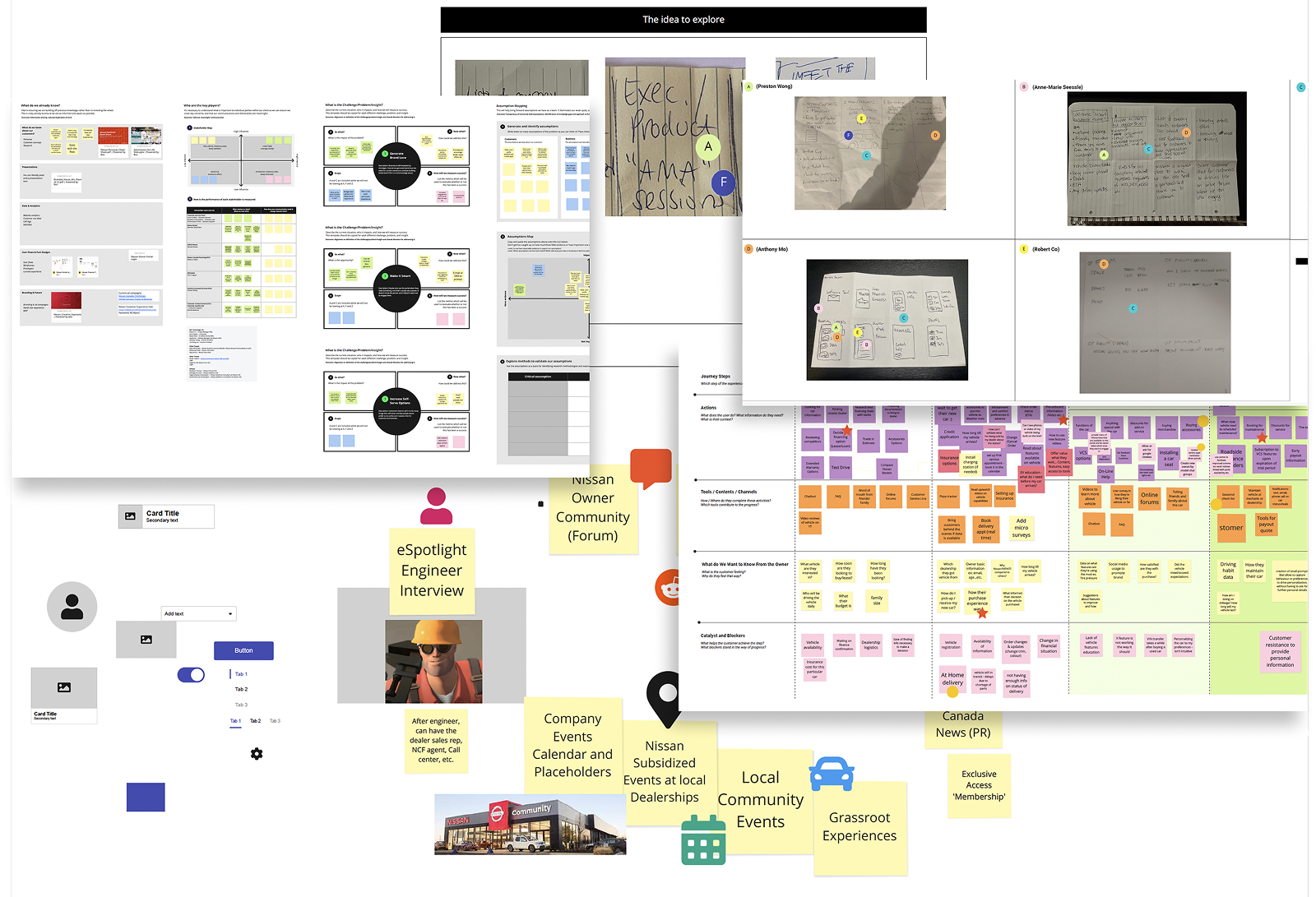
Design Thinking Workshops
Using "Crazy 8's" and "Future Flow Mapping," I facilitated workshops to shift the stakeholder mindset from a "Feature-List" focus to a "Lifecycle-First" approach, centering on the user's emotional state at each stage.
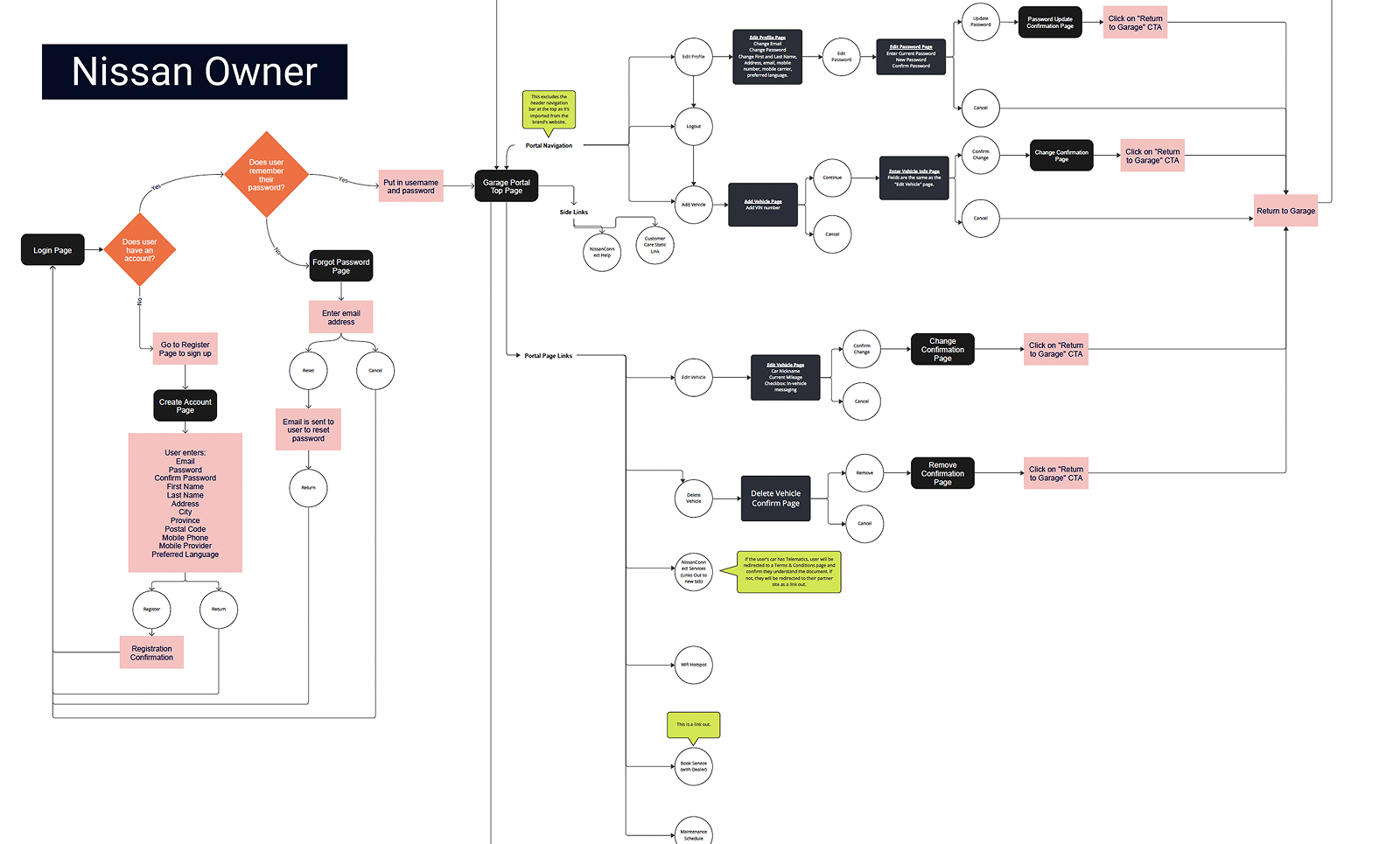
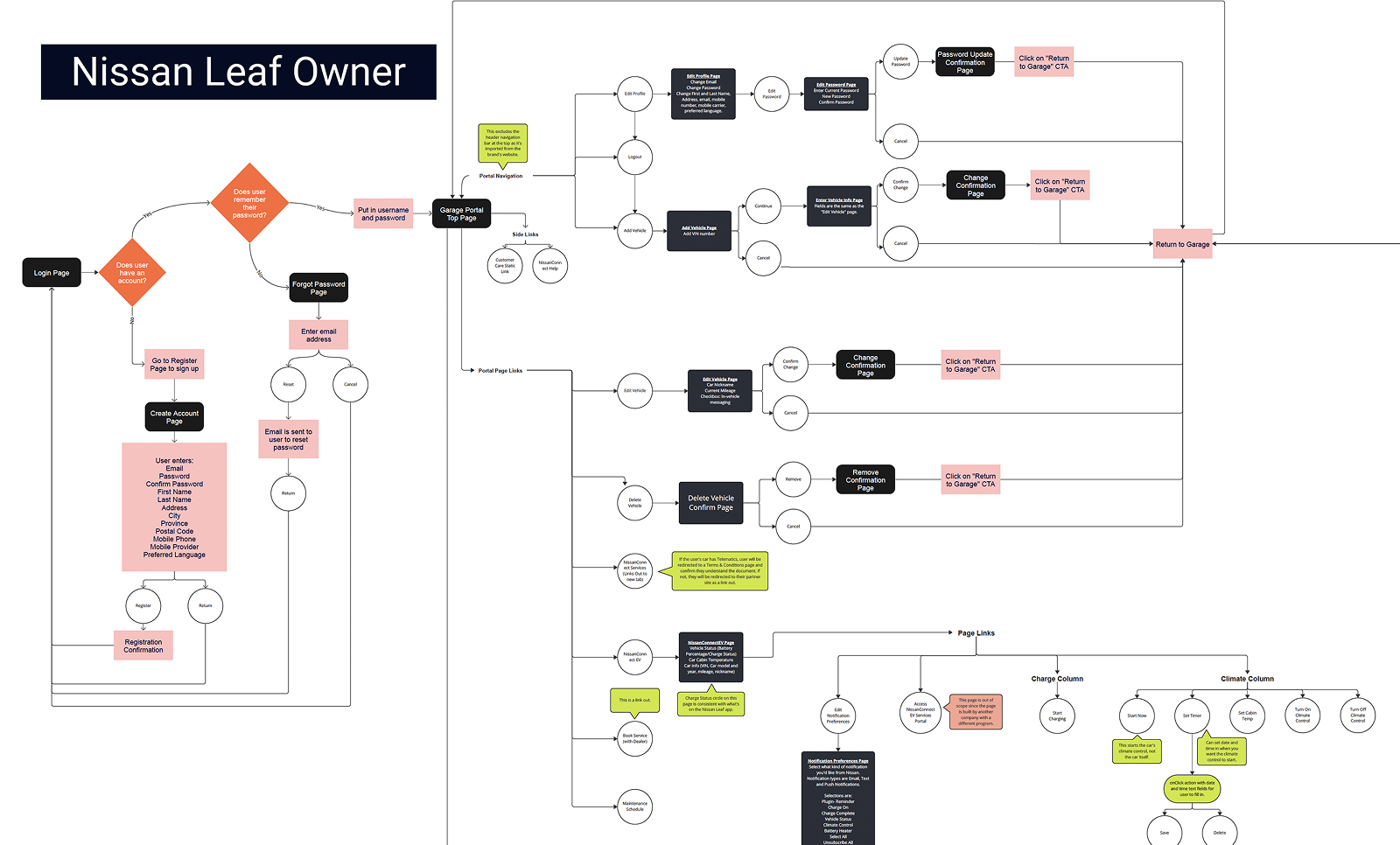
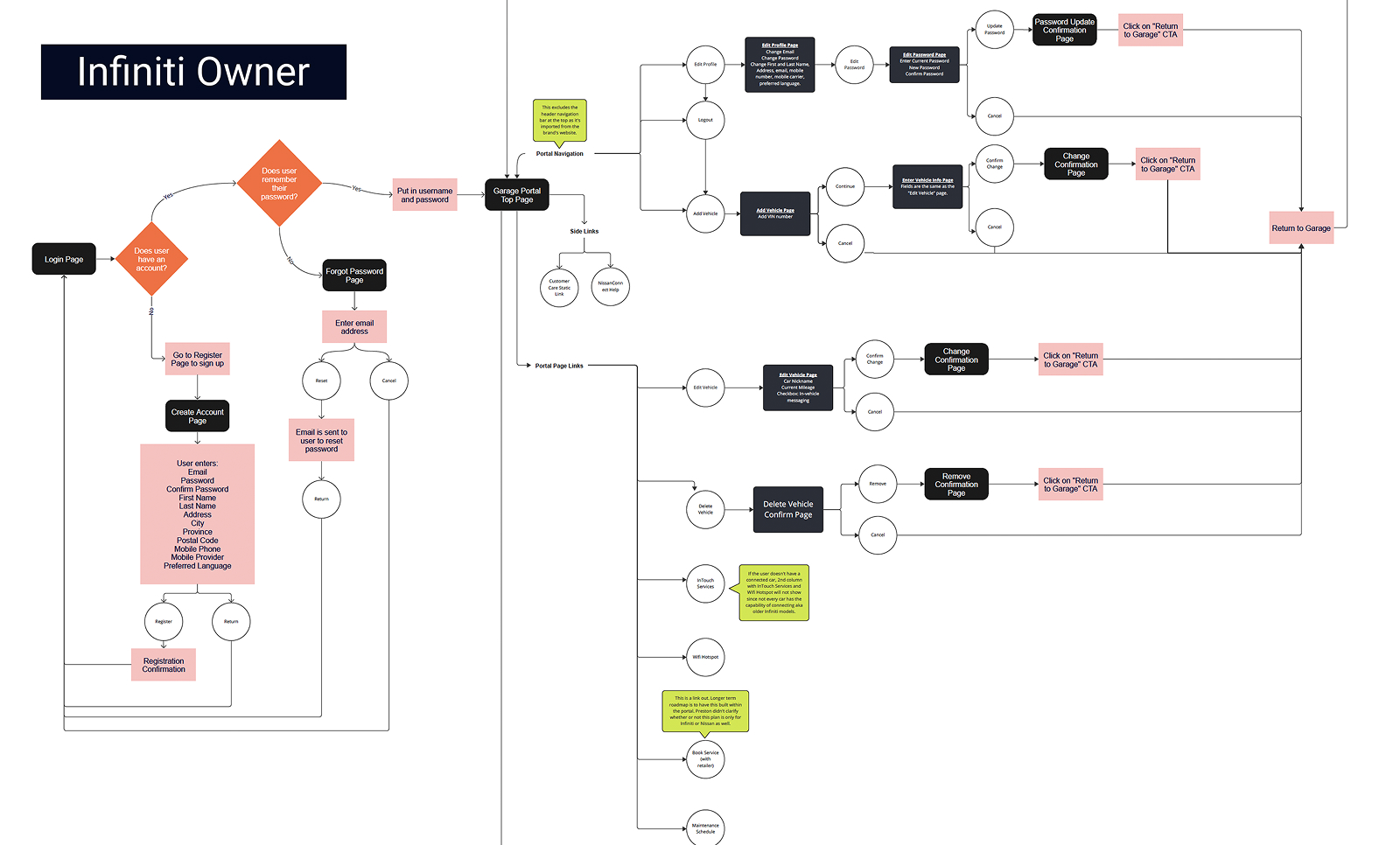
Complex Architecture Mapping
We mapped detailed user flows to handle logic variance between brands. This ensured high-frequency tasks (like Remote Start for EV) and low-frequency tasks (like Lease Renewal) were accessible without overwhelming the user.
Adaptive UX & Scalable Systems
To solve the complexity of multiple user types, we moved away from a static page model to a Context-Aware Interface.
Feature 01: Adaptive UX
// EV vs. Gas(ICE) Contexts
We designed a dynamic layout engine that adapts the hierarchy based on the vehicle's VIN data.
- For EV Owners: Addressing "Range Anxiety" was paramount. The dashboard prioritizes Real-time Battery Status, Range Estimates, and Charging Station Locators above the fold.
- For Gas (ICE) Owners: The priority shifts to Vehicle Health, emphasizing Oil Life monitoring and upcoming Maintenance Milestones to drive service revenue.
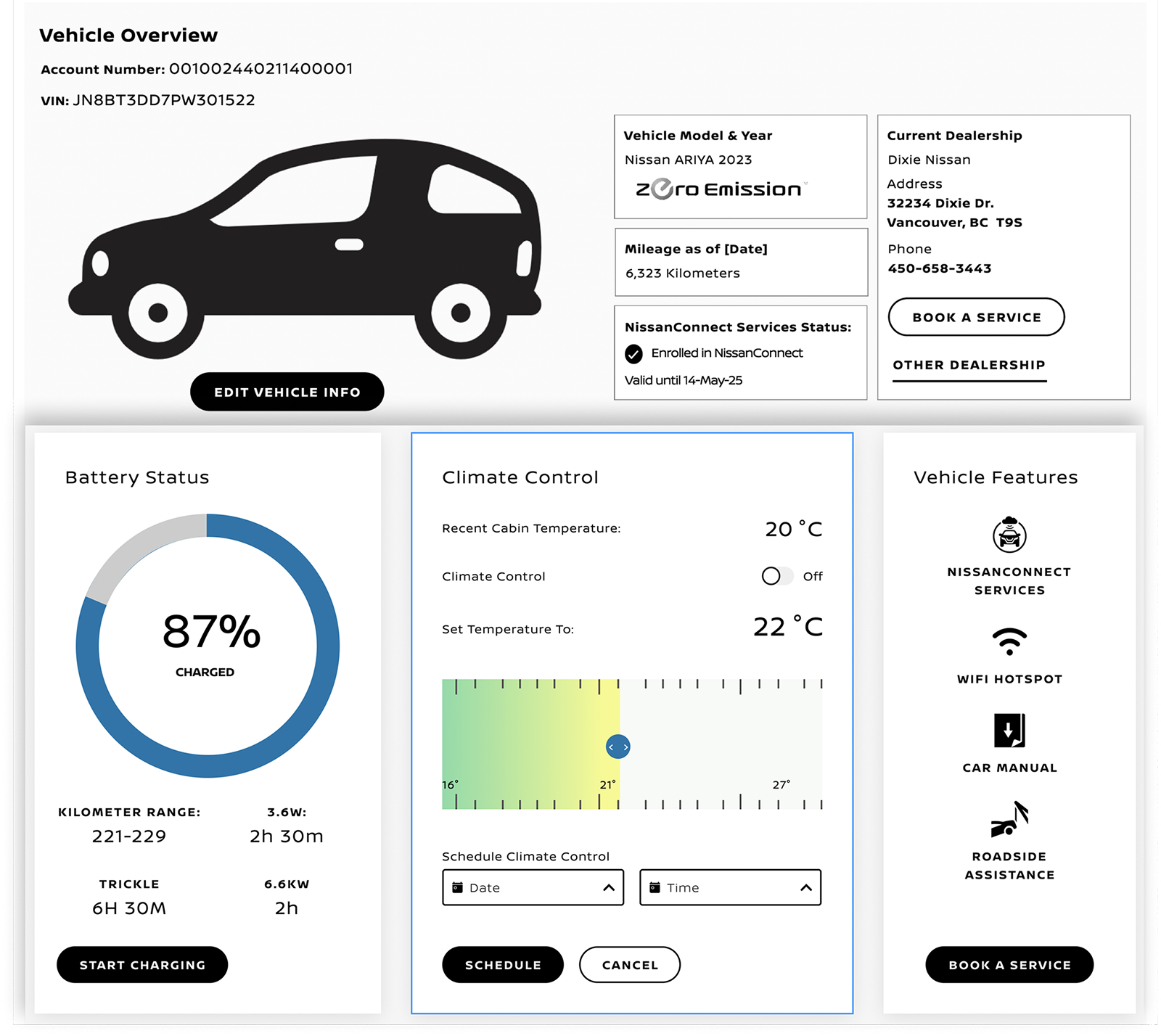
EV: Battery & Range Focus
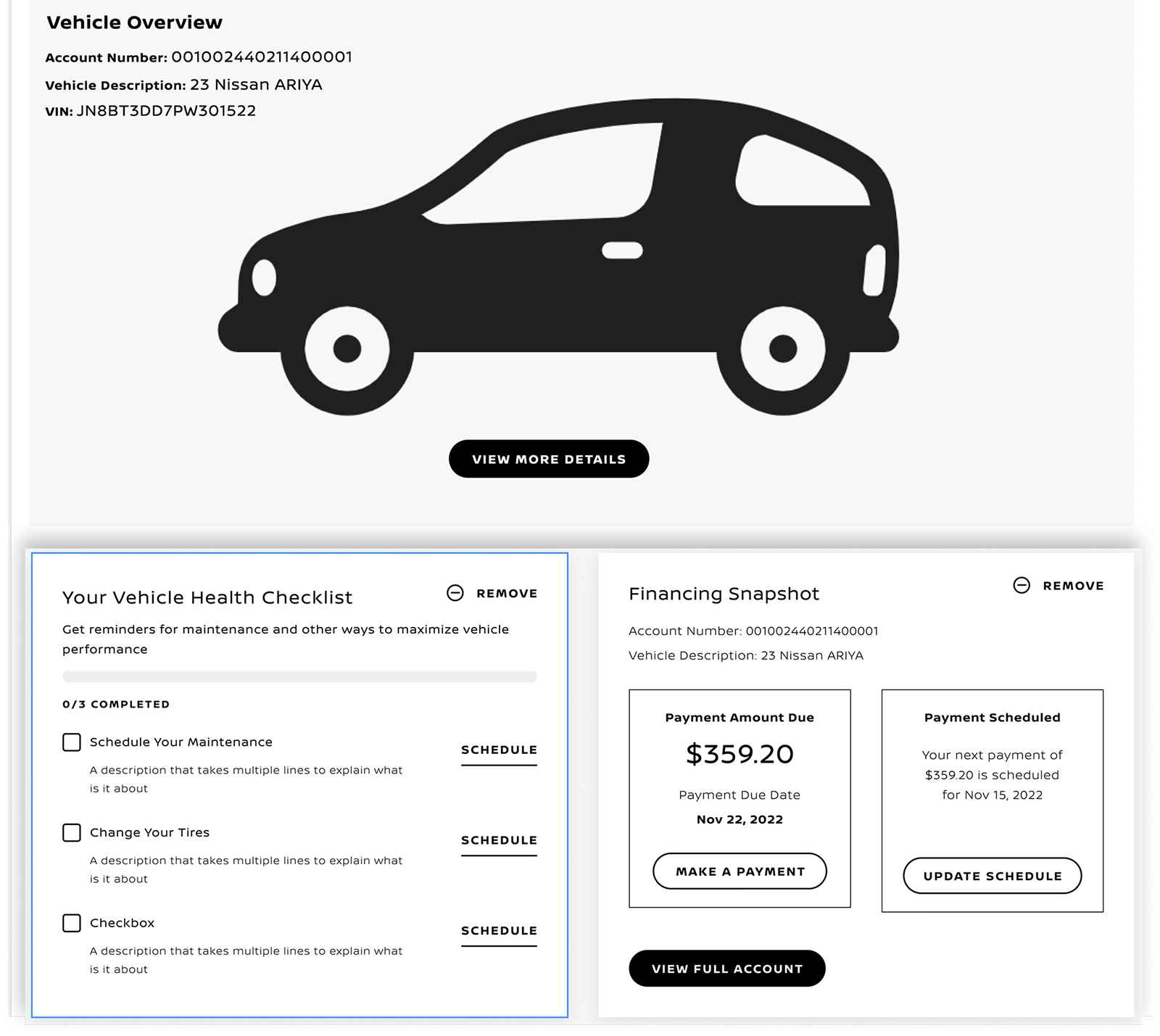
ICE: Maintenance Focus
Feature 02: Multi-Brand Design System
// Nissan vs. Infiniti
To maximize efficiency, I architected a flexible Design System using Design Tokens.
Theming Strategy
We separated structure from style. The same functional component (e.g., a "Service Card") renders with Nissan's energetic, high-contrast branding or Infiniti's minimalist, "Quiet Luxury" aesthetic.
Impact
This allowed us to deploy features simultaneously across both brands, reducing QA and development time by 40%.
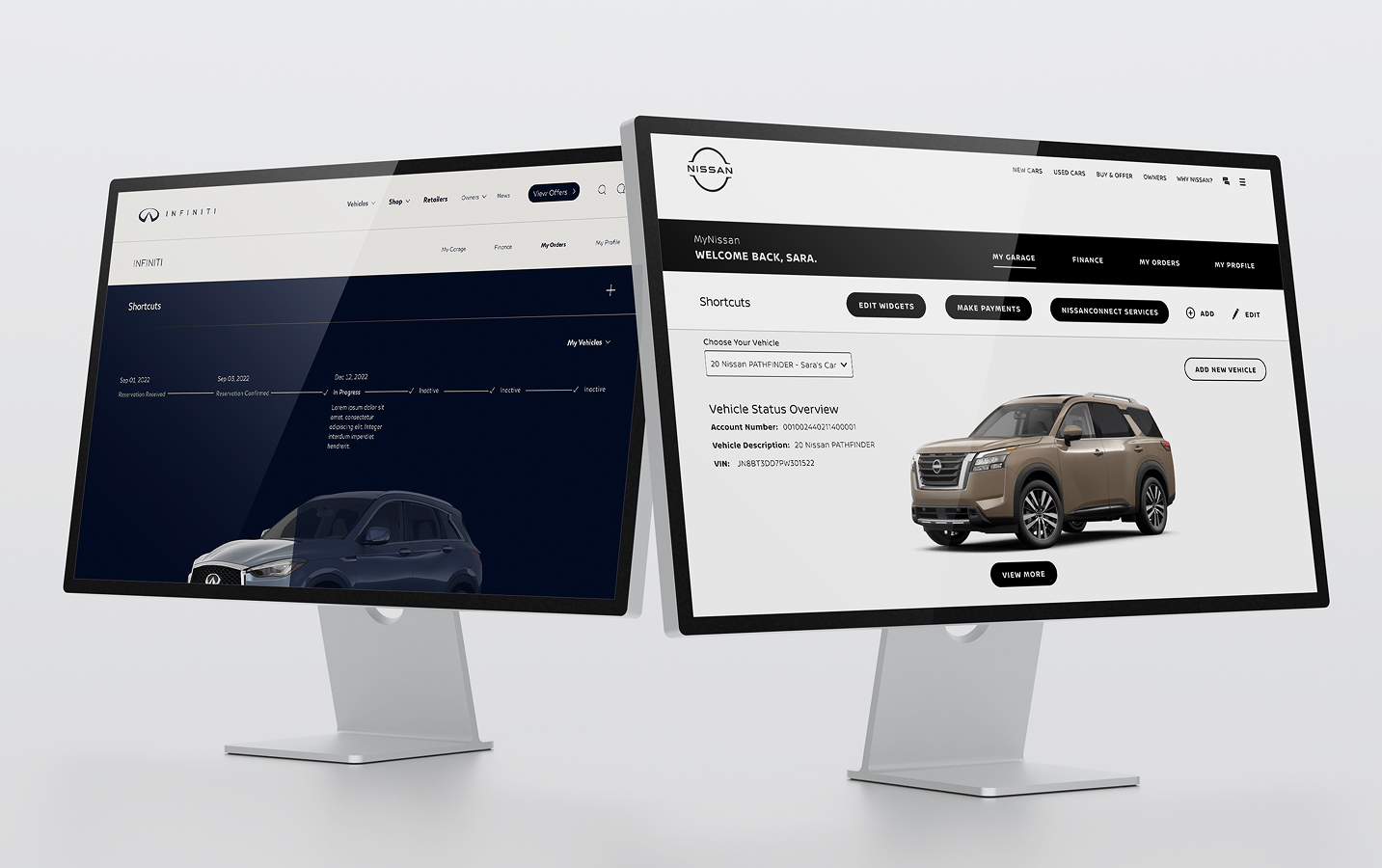
One codebase, two identities: Design System tokens enabling rapid multi-brand deployment.
Driving Loyalty
We identified key "anxiety moments" in the user journey and designed specific features to turn them into trust-building opportunities.
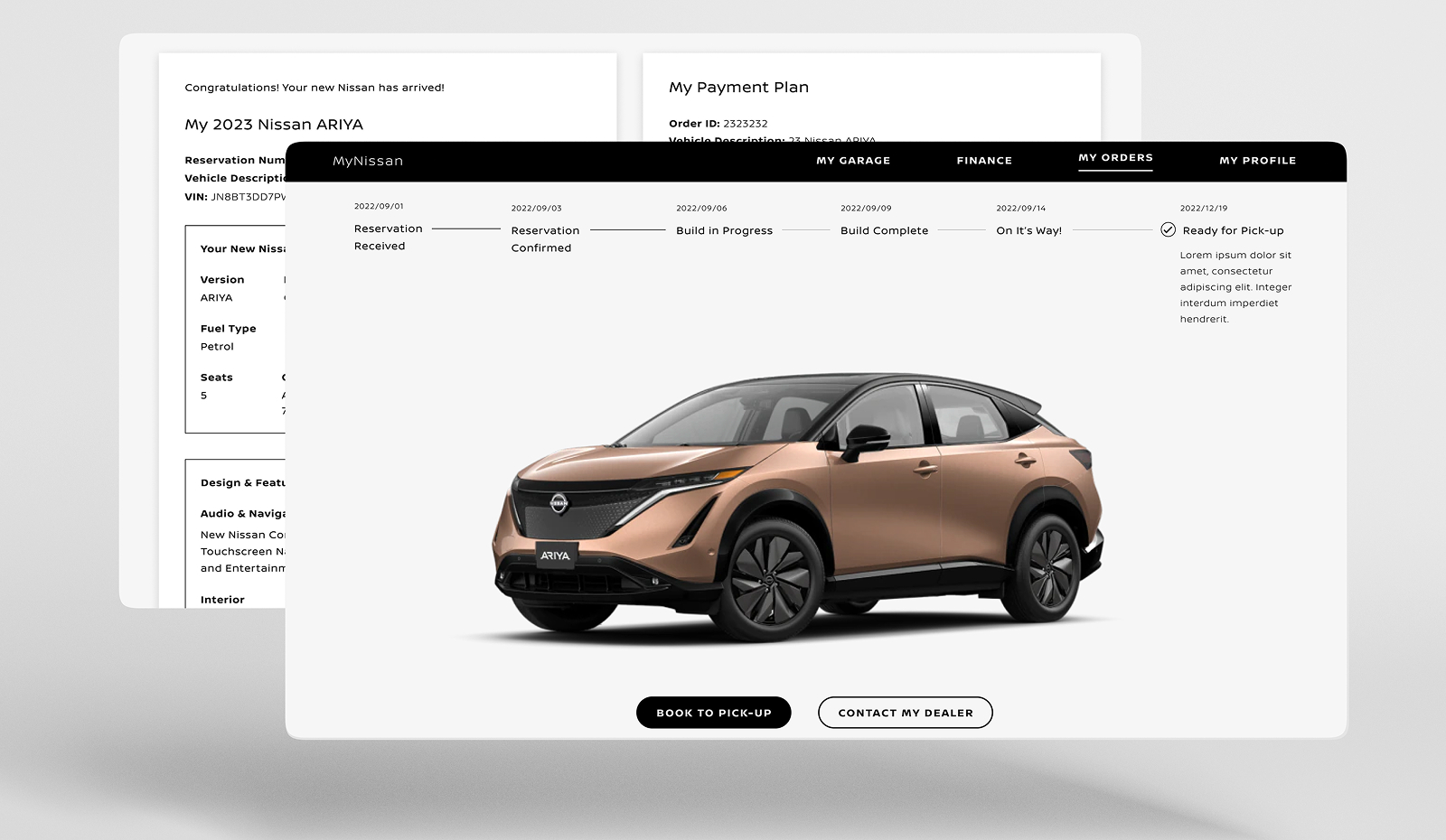
Phase 1: The "Pizza Tracker"
The User Need
The gap between signing the contract and receiving the car is a "Black Hole" of anxiety. Customers constantly called dealerships for updates.
The Solution
We introduced a granular Order Tracking System. Like tracking a pizza, users could see real-time status updates—from "Production Started" to "Shipped" to "Arriving at Dealership." This transparency maintained excitement.
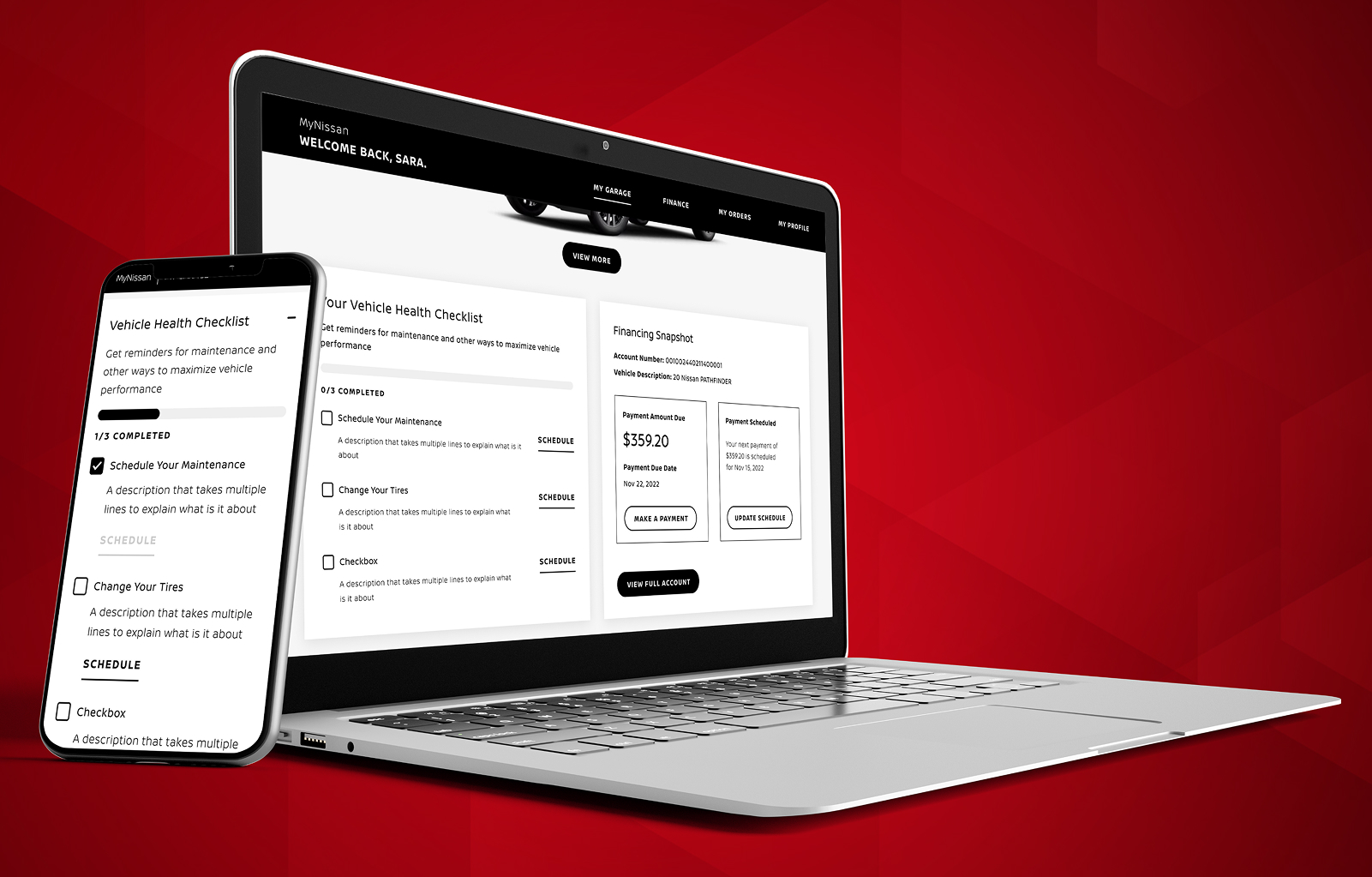
Dynamic maintenance checklist that updates based on vehicle milestones, integrating directly with the service scheduling flow.
Phase 2: Proactive Maintenance
The User Need
Owners often struggle to keep track of maintenance schedules (e.g., "When is my next oil change?"), leading to missed services and voided warranties.
The Solution
We designed a Dynamic Service Timeline. Instead of a static manual, the dashboard displays a "Living Checklist" that evolves based on the vehicle's age and mileage.
As the car approaches a milestone (e.g., 24,000 km), the checklist updates to show relevant tasks.
Each checklist item is paired with a "One-Click Schedule" button, pre-filling the user's vehicle data.
The Impact
Unified Digital Identity
Successfully merged "Shopper" and "Owner" profiles, eliminating multiple logins across Finance and Service systems.
Operational Efficiency
Unified Design System reduced development time for the second brand (Infiniti) by 40%.
EV Adoption Confidence
Dedicated onboarding improved initial user satisfaction scores by reducing "Range Anxiety" for new LEAF/Ariya owners.